Air Conditioner Buying Guide
Deciding on whether to install an air conditioning system is a question that must be thought about thoroughly, how often would I use an air conditioner? Will it be expensive to run? Does it require regular maintenance? What will a warranty include? Although there are a few questions to consider having a comfortable home environment is important. An air conditioner can keep you and your family cool during the hotter months and warm during the cold winter nights with the added bonus of a heating system. There is a range of air conditioning systems available today, you are spoiled for choice.
Whether you are after an air conditioner that will provide different temperatures in different rooms, or maybe you want an air conditioning system that offers a minimal aesthetic. Whatever it may be, there is a solution for you.
What Are You Looking for?
It’s important to understand what type of air conditioner you are after. Identifying how much space you wish to cool and how often you will be using the system will be very helpful when deciding whether or not an air conditioner is right for you. Ideally, everyone can benefit from an air conditioner and by using the system, to its best advantage with regular maintenance your air conditioner will give you many years of comfort. Also, if you decide to sell your home an air conditioner is a great addition to any homebuyer market.
If you have been considering installing an air conditioner, we say YES! There are so many systems and brands to select from you won’t be disappointed.
Size & Power
One of the first considerations when deciding whether an air conditioner is for you is identifying what area you would like to cool down or heat up. Is it just one room? Or a 3 storey house? The following question you must consider is how often will you use an air conditioner?
Energy Efficiency
Air conditioners on the bigger side will become more costly to run, that’s why you must consider how often you plan on using an air conditioner for your space. However as the room sizes increase, so will your air conditioner kWs. For smaller rooms, a bigger air conditioner will use a lot more energy and therefore end up costing too much! That’s why you must consider the energy efficiency rating, most appropriate for your space. Central Coast Air Conditioning knows exactly what air conditioner will best suit your property.
Types Of Air Conditioners
Split System Air Conditioners
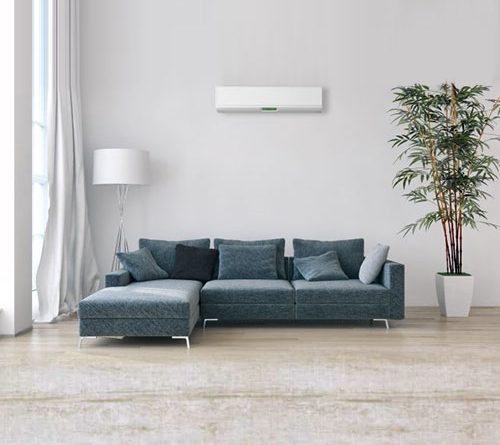
Split systems air conditioners compromise of two parts. One section is attached to the interior wall of your property, while the second part is located outside your property to exhaust hot air. Split systems are low costing and are efficient to install. They provide flexibility, as they offer individual systems for each room. Make sure you have an area in your home that is far away from any heating appliances, this is most likely where we would suggest to install your air conditioner. This way your air will be evenly distributed, while the external system must be installed in the shade, far away from tree leaves or an area that will be close to neighbours.
Reverse Cycle Split System
A reverse cycle split system is perfect for those who wish to use their air conditioner during the winter and summer months. A reverse cycle air conditioner is cheaper and simple to install in comparison to a ducted heating systems
Inverter systems
These air conditions are various with temperature distribution. Instead of starting and stopping they can control the temperature effectively while running. They are cost-effective and energy-efficient. They will create your perfect room temperature in minutes. However, they are more expensive to purchase.
Multi-system
These systems are connected to one outdoor system. The multiple systems indoors have less ductwork and only have one control station that controls the whole system. This means if you’re after an air conditioner that allows you to control individual room temperatures, this isn’t the air conditioner for you. This system allows you to only set one temperature throughout the whole house or room.
Portable systems
This is the perfect selection for a quick fix. They are flexible and are ready to use straight away just by plugging it in the wall! They have a reverse cycle mode which can either heat up or cool down your space. However they will only accommodate to a small room, so if you’re after cooling down or heating up an office space or multiple bedrooms, this would not be the most cost effective solution.
There is a lot to consider when purchasing an air conditioner. We are here to help you throughout the whole process! We are experts in everything air conditioning, so be sure to contact us and we will be more than happy to assist you with installing, repairing or maintaining your air conditioners.